

RFID workwear and
uniform tracking
Every garment linked to a wearer and a customer site, from first issue to retirement.
Request a system check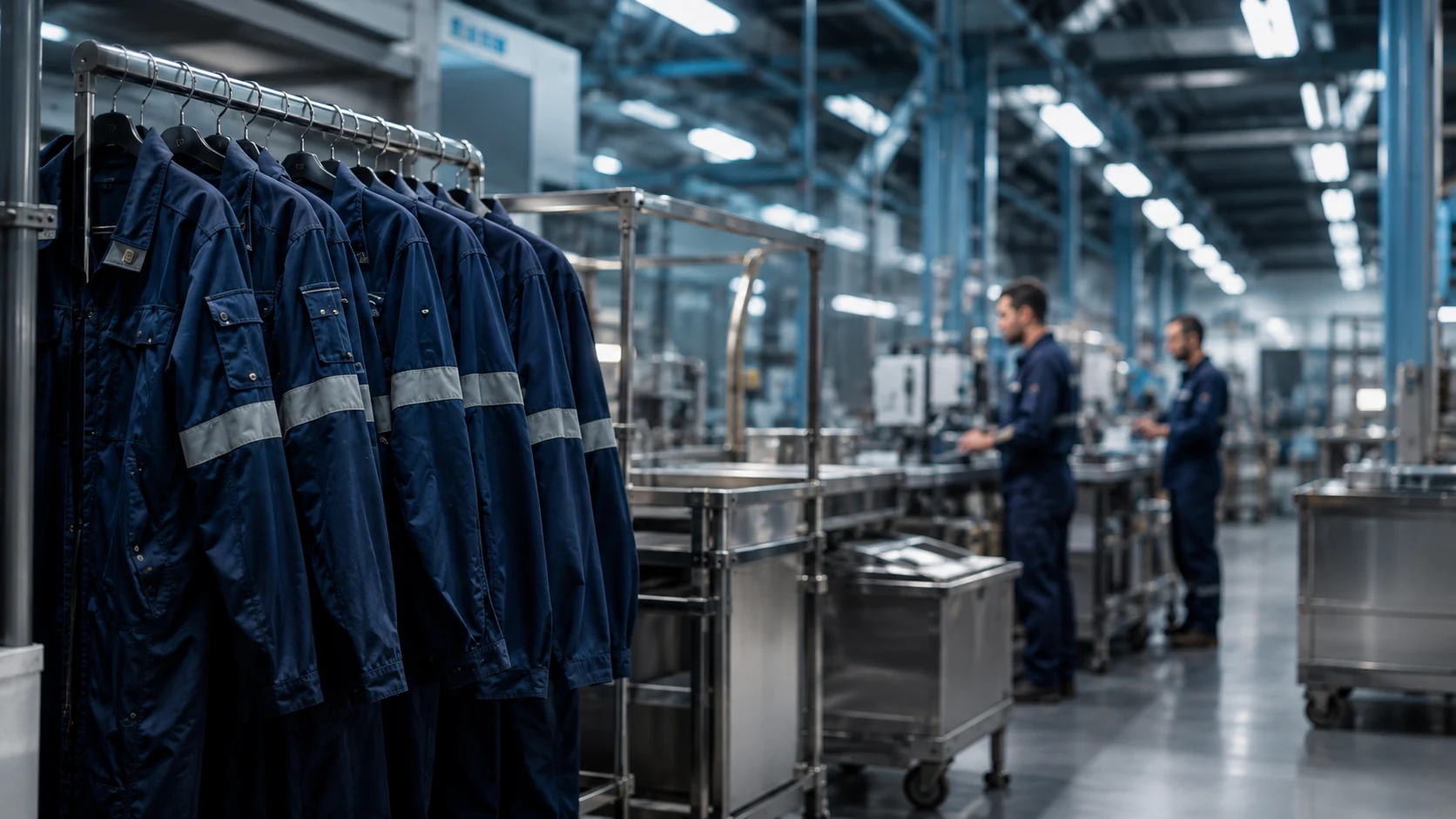
What RFID does for workwear and uniforms
What it is
 What it is
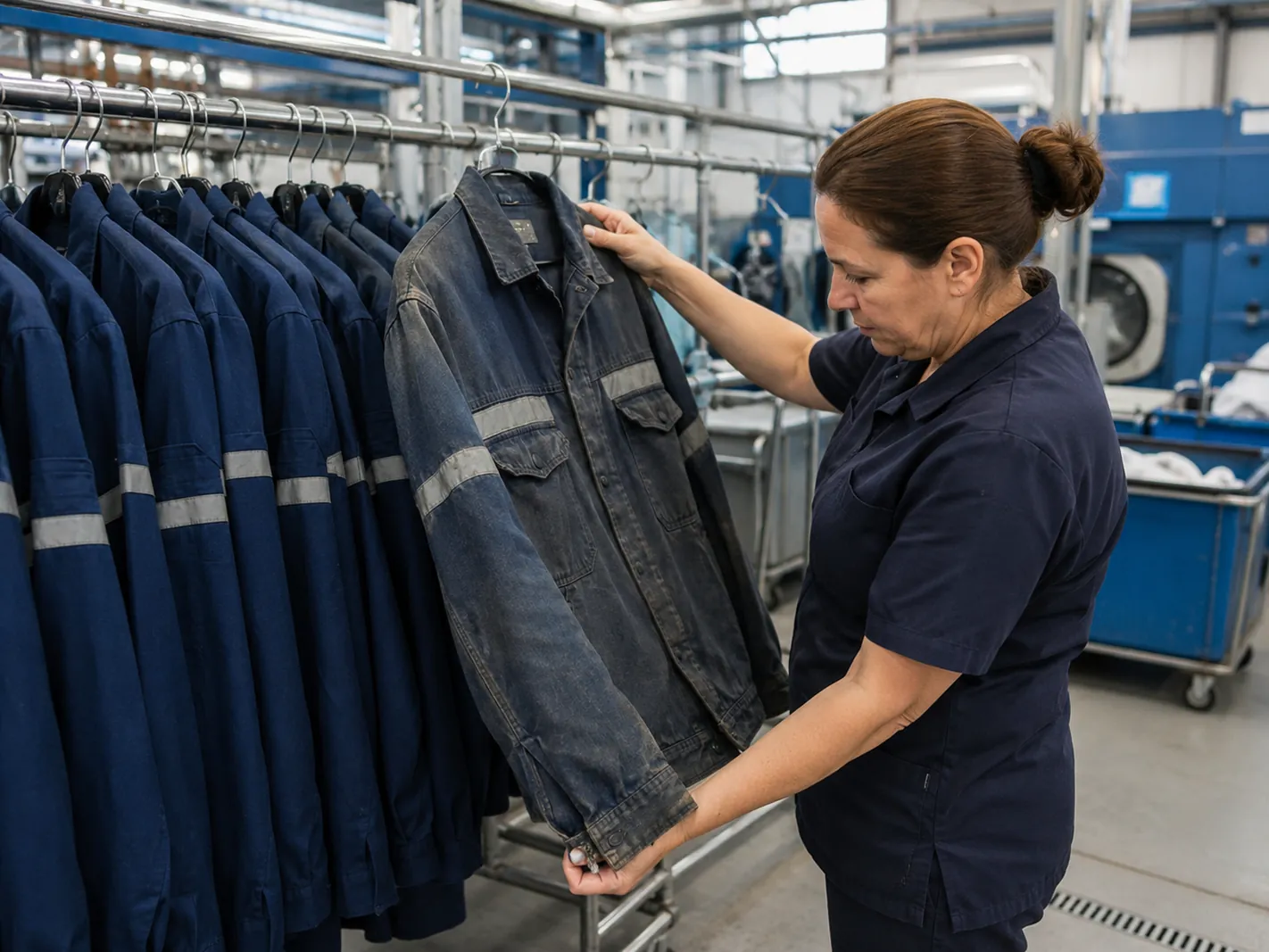
RFID uniform tracking gives every garment a washable UHF tag and links it to a wearer and a customer site. Each time the garment passes a read point, the laundry knows where it is in the cycle, how often it has been washed and who it belongs to. For RFID uniform rental and RFID garment rental, that replaces manual sorting lists and estimated balances with item-level records: which garments went to which site, which have not come back yet, which need repair and which have reached the end of their life. Textile service companies use this to get garments back to the right wearer, to account for losses per customer and to plan replacement on actual use.
Designed for 200 industrial wash cycles per Saphire One tag.
200
Read range of up to 12 m, based on EECC free-air testing under FCC conditions. Actual read range depends on reader setup, tag orientation, textile arrangement and operating environment.
12 m
Our RFID solution lets you reduce fabric loss by up to 70%, measured as the share of garments lost across the whole cycle.
70%


The system
Three parts of an RFID uniform tracking system
A uniform tracking system is a tag in every garment, suitable hardware where garments change hands, and software that links each read to a wearer and a customer. You can take all three from us or only the one you are missing: our software for tags and hardware you already have, or three set-ups instead of all six reading stations.
The tag
Every garment carries a passive UHF tag with its own identity. It has no battery: the reader supplies the energy, the tag answers. It stays in the garment through washing, drying and finishing.
The hardware
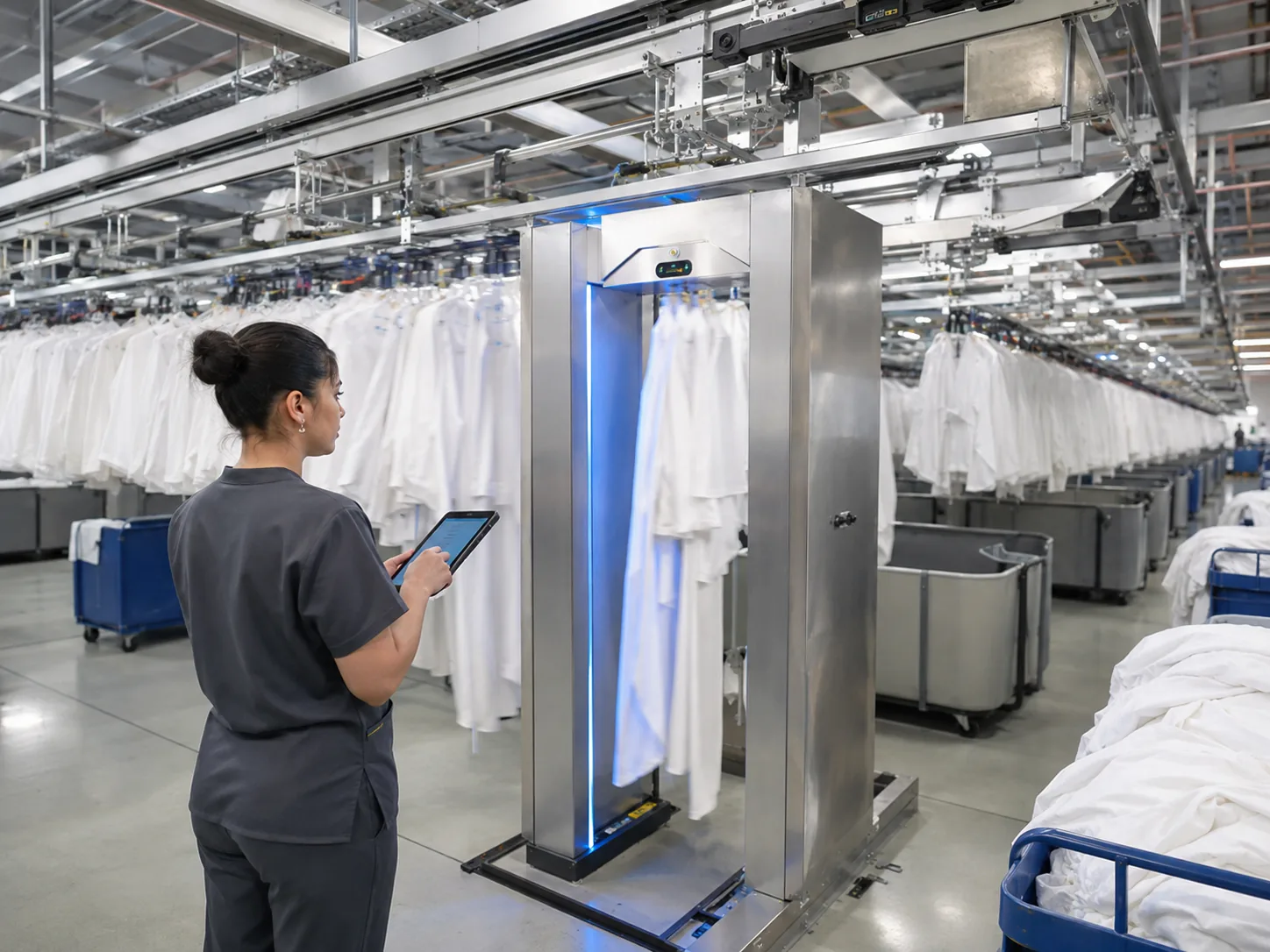
Portals and tunnels read carts and rails of garments at once, and read stations cover the steps in between. Where each read point goes follows your garment flow. Existing readers stay in use where they do the job.
The software
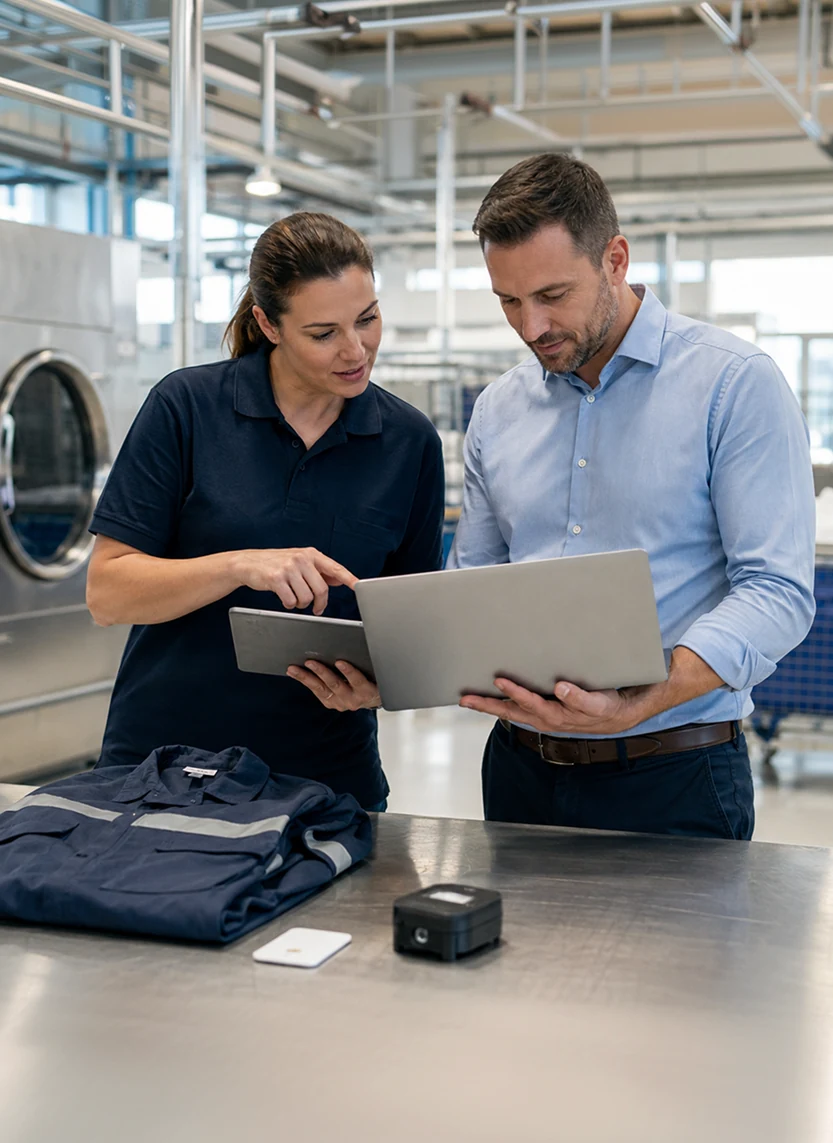
Every read lands in the Leanwave dashboard and becomes a garment history: wearer, customer, wash count, repairs, last seen.


How it works
A garment’s
life cycle,
step by step
with RFID


1/5
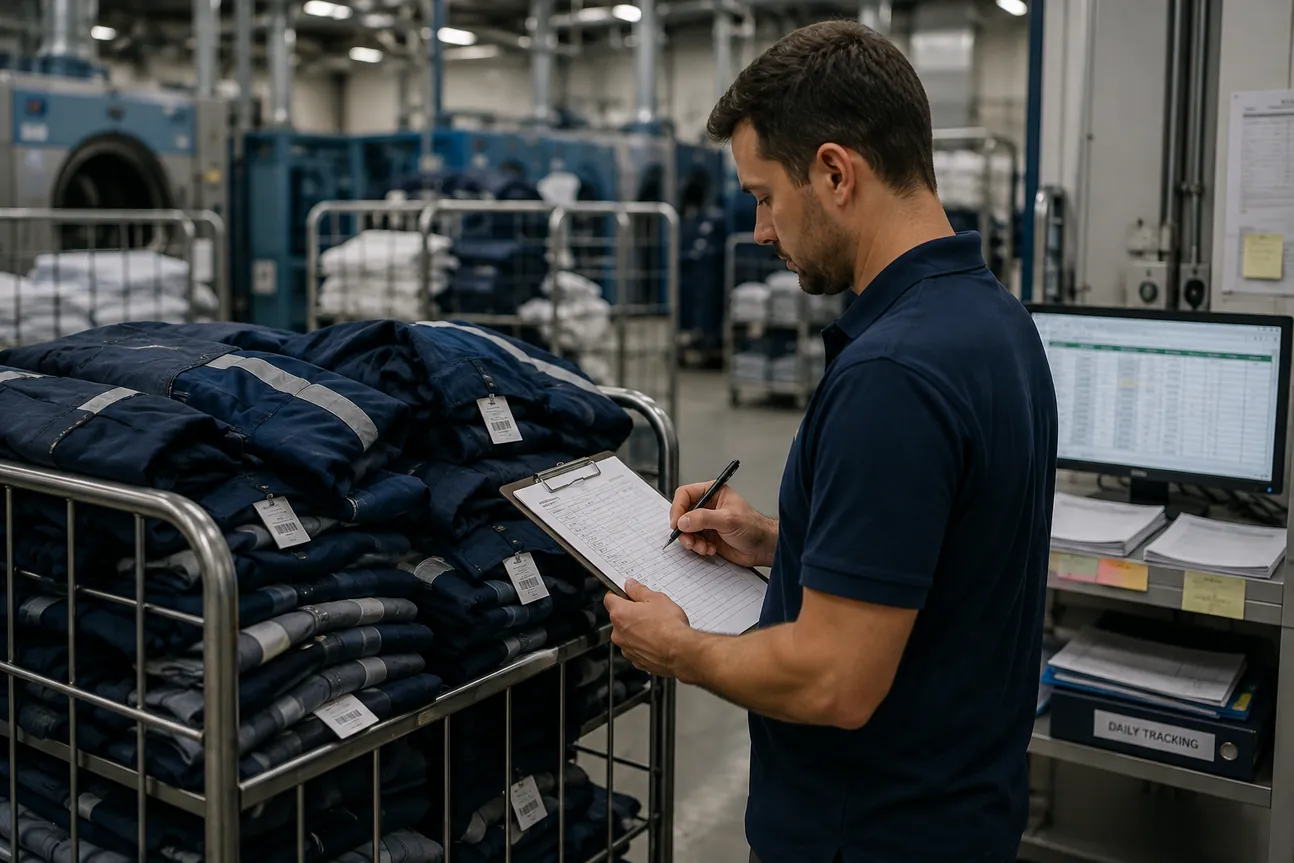
1. Tagging and assignment
New garments are tagged before they enter circulation and linked to a wearer and a customer site. Tagging garments that are already in circulation is optional and available on request.
2. Collection and intake
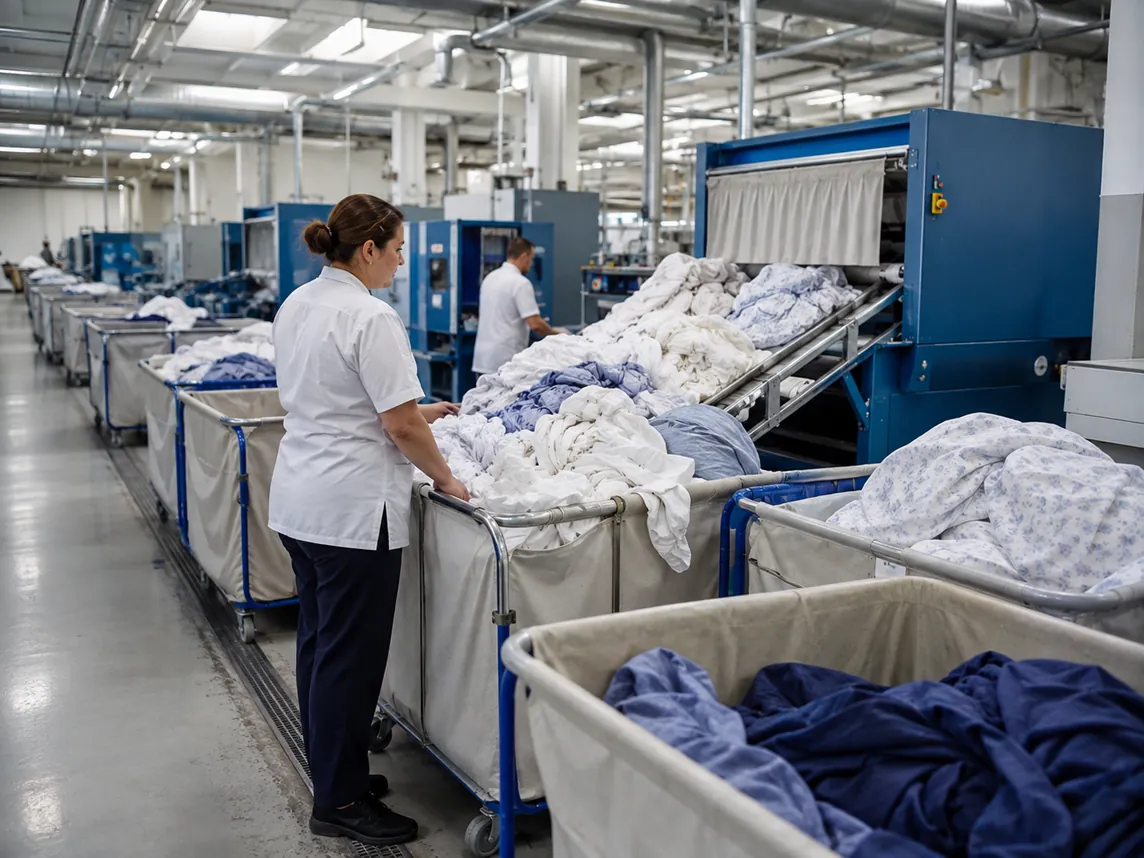
Used garments come back from the customer site. A read point at the intake dock books them in without unpacking, so you know what each site has returned before anything is sorted.
3. Sorting and washing
Garments are sorted to the right wash program, and the count of each garment rises with every cycle.
4. Repair and finishing
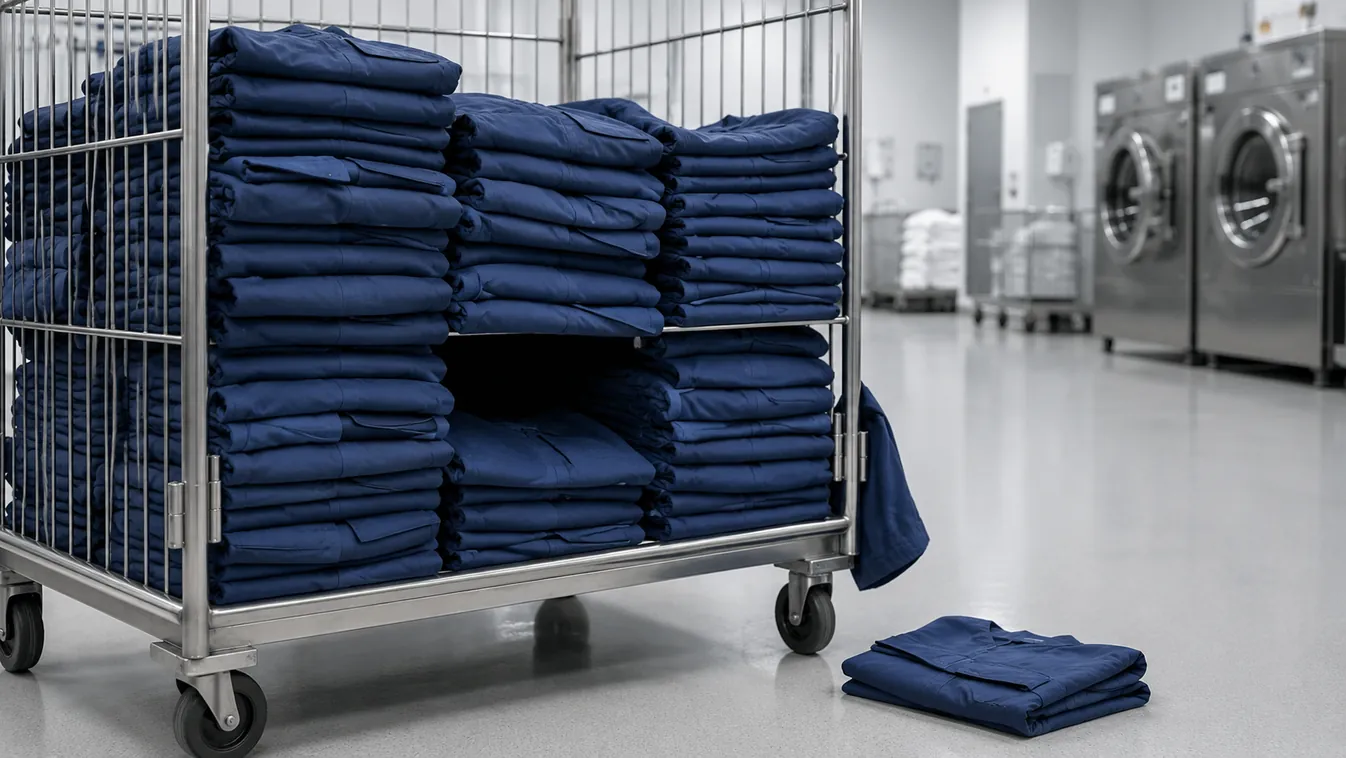
Garments due for repair or at the end of their planned cycles are flagged. After drying and folding or hanging, a read verifies each garment and allocates it to its wearer and customer.
5. Delivery and retirement
A dispatch read becomes the delivery record per customer site. You see which garments have left dispatch and have not come back yet, and when a garment is retired, its full history is on record.
Read-point strategy
Where to read garments,
and with which set-up
Read points follow your workflow, not your building plan. We map your plant and your garment flow before we specify any hardware.
Intake dock
01Portal
Also possible: tunnel
Key station
You know which garments each customer site has sent back before a bag is opened, and differences against the delivery note surface at the dock.
Sorting
02Read station
At the sorting table
Each garment goes to the right wash program. Garments due for repair or retirement can be flagged here, so they are taken out at the quality check after folding.
Drying station
03Read station
Automated, no extra handling
Key station
Drying gives far more time to read every tag than a quick pass through a portal, which makes it the most reliable read point in the plant and our redundancy point, without extra handling. You see which garments have finished the wash and where they pile up, and each cycle counts towards the history of the garment.
Folding
04Read station
At the folding station
Key station
Clean, dry garments read most reliably. This is where each piece is verified and allocated to its wearer and customer before packing.
Dispatch
05Tunnel
Also possible: shielded portal or in-cart reading
Your delivery record per customer site writes itself, and a missing garment is noticed while the rail or cart is still on site.
Returns at the customer site
06Drop box
Also possible: a movable cabinet on the delivery truck
Returns are read where they are handed back: a fixed drop box at the customer site or a movable cabinet on the delivery truck. Anything counted at the laundry is intake. You see which garments have left dispatch and have not come back yet.
- You do not need all six. Start with the three key stations, intake, drying and folding, and add the others where the data shows a gap.
- More range is not always better: a dispatch tunnel shall not read the rail waiting behind it.
- Read rates depend on textile type, load density and surroundings. We measure them in the pilot, read point by read point, before anything is rolled out.
Per wearer, per customer
What item-level data means in uniform rental
In workwear rental, a garment is not interchangeable. It belongs to one person at one site, and the laundry answers for it.
The right garment for the right wearer
Each garment is linked to a wearer and a customer site, so allocation comes from the read rather than from a printed list.
Accountability per customer
Dispatch and return reads add up to what each site holds. Loss discussions and replacement charges rest on documented balances.
Repair and replacement
Wash counts and repair history per garment show what is worth repairing and what should be replaced, before a worn garment goes back out.


Benefits
What changes when every garment is counted
These are the changes textile service companies look for when each garment carries its own record.
Less sorting by hand
Bulk reads replace manual tallies at intake and dispatch, and allocation comes from the read.
Losses you can locate
When a garment leaves the cycle, you see at which step or with which customer.
Wash counts per garment
Each piece carries its own count, so you can compare garment qualities by how long they last.
Records your customers can check
Delivery and return records come from reads. Disputes are settled with data rather than with estimates.
Better replacement planning
Purchasing follows actual circulation and wear, not last year’s stocktake.
Stock without counting by hand
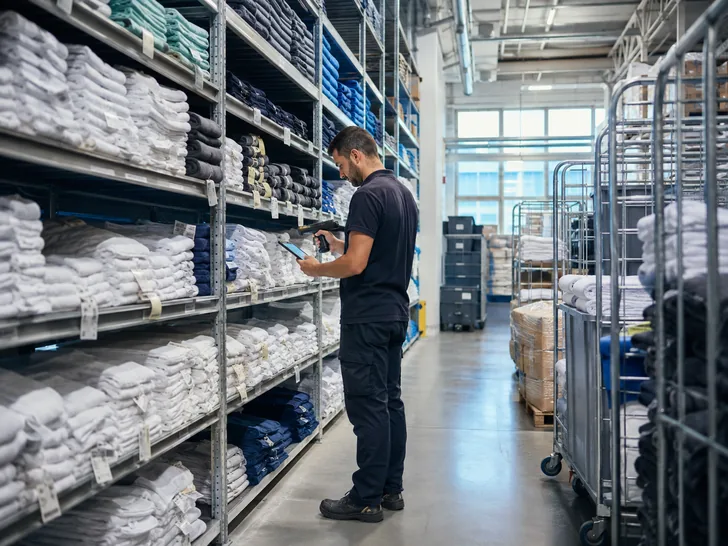
Stock per customer site and garment type follows from the reads at your read points, so you no longer count by hand to know what is out.


Implementation
How we implement RFID for workwear
We start with your garment flow, not with a hardware list. Each step ends with a decision you can check.
1/6
1. Baseline. We look at your garment types, customers and flows, and at where garments go missing today. Without a baseline, nobody can say later whether the system paid off.
2. Tag test. We choose tag and attachment per garment type and test them in your wash programs, on your garments. Samples come before any order.
3. Reader infrastructure. We plan read points for your plant. Existing readers stay in use where they do the job.
4. Pilot. The hardware is planned for the whole laundry and the dashboard for your whole RFID set-up. Only the tags start small, with one customer or one product line at one site. We measure read rates and process effects and adjust before scaling.
5. Rollout. Tags go into new garments before they enter circulation, and tagging extends to further customers and product lines step by step. Tagging garments that are already in circulation is optional and available on request; we do not attach those tags ourselves.
6. Optimisation. After go-live we review read rates, exceptions and loss figures with you and move, adjust or add read points where the data says so.

When RFID is not the answer
When RFID is
not the answer
If RFID is the answer, we build with RFID. If it isn't, we find what is. For small garment pools or low losses, something simpler can pay off sooner.
RFID
| Fits when | Volumes are high, items circulate many times and you need counts and histories per item and per customer. |
|---|---|
| Limits | Every item needs a tag and every read point needs hardware, so volume and losses have to justify the investment. Metal-heavy areas need a carefully planned reading zone. |
| Typical use | Intake and dispatch counts, rental balances, wash counts. |
Barcode
| Fits when | Volumes are lower, items are handled one by one anyway and the budget per item is tight. |
|---|---|
| Limits | Needs line of sight and reads one item at a time. Printed codes have to stay readable through industrial washing. |
| Typical use | Manual check stations, small textile pools, looking up a single item. |
Camera and AI
| Fits when | What matters is visible, such as whether an item is clean, stained or damaged, or what type it is. |
|---|---|
| Limits | Recognises a type or a condition, not the identity of one particular item across many cycles. Needs fixed positions and controlled lighting. |
| Typical use | Telling you whether a garment is broken, stained or has lost colour, which also helps with sorting. |
Process change
| Fits when | Losses or delays come from the workflow itself, such as unclear handovers, a step where nobody counts, or a bottleneck. |
|---|---|
| Limits | Depends on routines being followed and produces no item history. |
| Typical use | A fixed handover routine, a reorganised dispatch area, a counting step where none exists. |
Often the answer is a combination: RFID at intake and dispatch, a camera at the quality check, a changed routine at the handover.
Request a system checkFAQ
Questions about RFID for
workwear and uniforms
What is RFID uniform tracking?
RFID uniform tracking means giving each garment a washable radio tag and recording it automatically as it moves through the laundry and back to the customer. The software links each tag to a wearer and a customer site. That shows what each customer site holds, how often each garment has been washed, which pieces are due for repair and which have left dispatch and not come back yet.
How does RFID help uniform rental companies?
In uniform rental the laundry owns the garments and answers for them. RFID gives it item-level records instead of estimates: what went to each site, what has not come back yet and what has been lost. That makes allocation faster, loss discussions shorter and replacement charges traceable. It also shows which garments are worth repairing.
What are RFID textile services?
RFID textile services are rental and laundry services in which each textile carries an RFID tag, so the provider can account for every item. For the customer that means delivery and return records they can check. For the provider it means automatic counts, wash counts per item and a documented basis for loss and replacement charges.
Who offers RFID-enabled uniform programs?
Textile service companies run the programs, and they rely on suppliers for tags, readers and software. Leanwave by Otto ID Solutions is such a supplier: we provide washable UHF tags, reader infrastructure, the Leanwave dashboard and process consulting, as a full system or as individual parts for laundries that already have some of the equipment.
Can each garment be linked to a specific employee?
Yes. The tag itself only carries an ID number. The link to a wearer and a customer site lives in the software, so it can be changed when a garment is reassigned, and no personal data is stored on the tag. That lets the laundry sort and allocate garments to the right person.
Can RFID tags survive industrial washing of workwear?
Yes, if they are laundry tags made for industrial processing. Saphire One is designed for 200 industrial wash cycles, 60 bar in the extraction press and sterilisation at 134 °C, and it is certified to OEKO-TEX Standard 100, product class I. We test it on your garments and in your wash programs before anything is ordered.
Should tags be sewn in or heat-sealed?
Both work. Saphire One comes as a 70 × 10 mm sew-in and a 72 × 12 mm heat-seal version. Sew-in tags suit garments that are sewn or repaired anyway; heat-seal tags suit tagging in volume when you already have a press. We decide this per garment type in the tag test.
Do we have to replace our garments to start?
No. Garments already in circulation stay in use. As standard, tags go into new garments before they enter the cycle, so the tagged share grows as you replace stock. Tagging garments that are already in circulation is optional and available on request; we do not attach those tags ourselves.
Do we have to buy the complete system?
No. You can take the full system from us or only the part you are missing. If you already have tags or hardware, you can use our software on its own. If you want to start small, you can begin with three set-ups instead of all six reading stations and add the others later.
Can RFID track garments at the customer site?
Only within range of a read point. Passive tags have no battery and no GPS. A small read cabinet on the delivery truck or a drop box at the customer site can record what goes back. Between reads, the software shows where each garment was last seen and which garments have left dispatch and not come back yet.
Can garment dispensing cabinets be connected?
Yes. Our tags can be connected to any dispensing system, and we also have our own system for issuing garments. On request, we supply the cabinet as well.
Does RFID help with protective clothing and PPE records?
Yes. RFID can improve the traceability and management of protective clothing and personal protective equipment (PPE). Each garment carries its own RFID identity, so its use, cleaning cycles, inspections, repairs and maintenance history are recorded automatically. That makes it easier to keep accurate records, schedule required inspections, see which garments need replacing and support compliance with the safety rules that apply to you. RFID also cuts manual documentation and shows where each protective garment is, what condition it is in and where it stands in its life cycle.
How much does RFID for workwear cost?
It depends on how many garments you tag, how many read points you need and what the software has to cover, so there is no honest flat price. Tag costs scale with your garment pool, reader costs with your plant layout and flows. We start with a baseline of your losses and counting effort and size the system against it. Send us your volumes through our contact form.
What is the difference between uniform tracking and RFID linen tracking?
Uniform tracking follows garments that belong to a wearer and a customer site, so allocation and repairs are central. RFID linen tracking covers flat linen and towels, which have no wearer and are handled in dense loads through ironers and folders. The technology is the same, but read points, software set-up and commercial questions differ.
Industries
RFID for your kind of laundry
The technology is the same. What you count, where you read and what you bill differs by industry.
- RFID for healthcare laundriesHospital linen management with RFID: linen, scrubs and patient gowns per ward and hospital.

- Hotel linen trackingFor laundries serving hotels: see per property whether the planned stock of sheets and towels per room (the par level) is really there, with rental and hotel-owned linen kept apart.
- RFID linen trackingSheets, towels and table linen counted in bulk, with balances per customer for linen rental.
- RFID laundry trackingHow tags, readers and software follow every textile through the laundry cycle, step by step.
- RFID laundry tagsSaphire One: designed for 200 industrial wash cycles, sterilisation at 134 °C, sew-in or heat-seal.
Find out whether RFID fits your garment flow
Tell us about your garment volumes, your customers and where pieces go missing. We look at your process, recommend read points where RFID pays off, and say plainly where it does not. Want to test tags first? Request Saphire One samples through our enquiry form.