


Insights
How RFID works in uniform rental programs
The quick answer
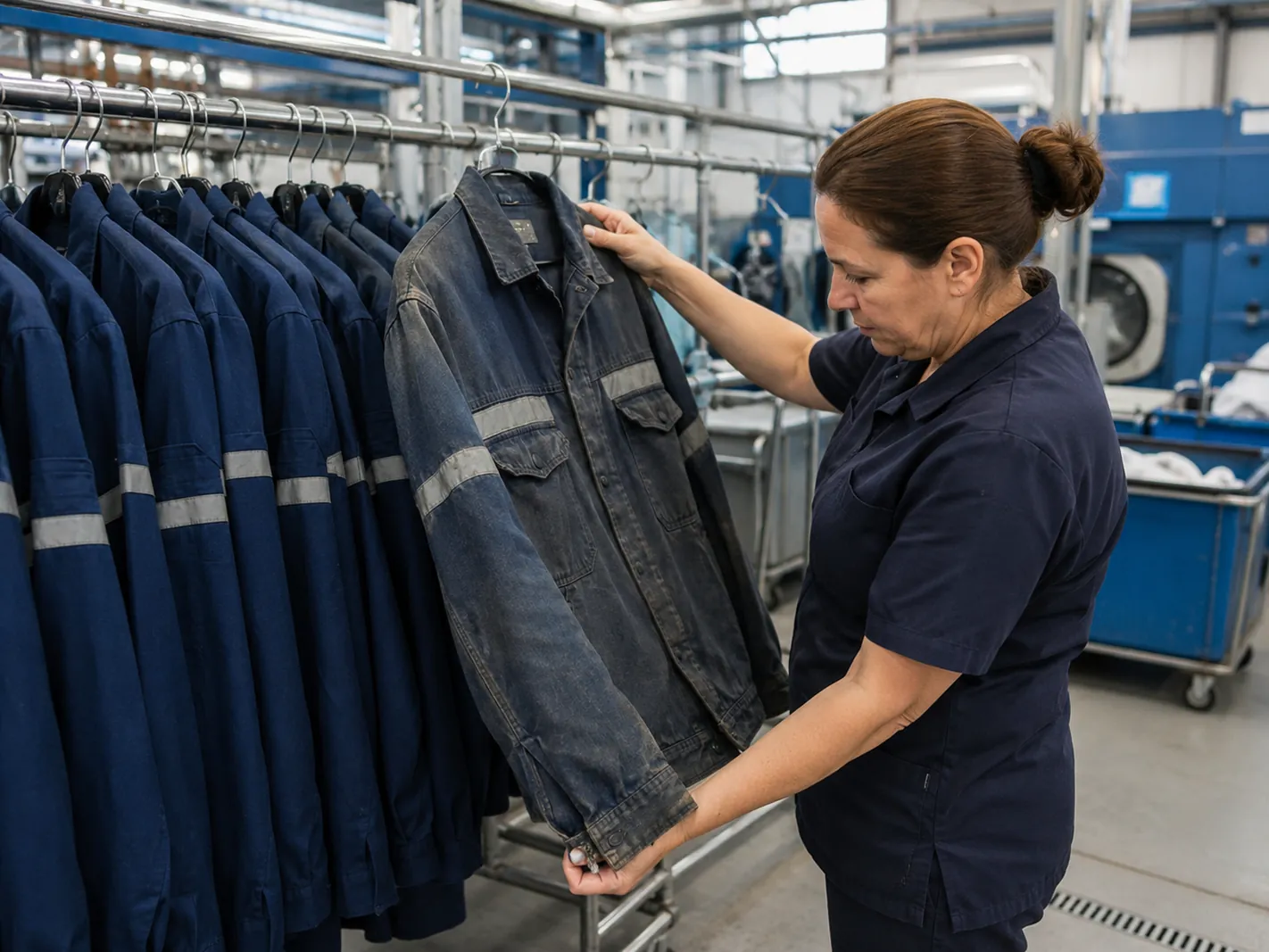
In a uniform rental program, the laundry owns the garments and answers for them. RFID gives every garment a washable UHF tag and links it, in the software, to a wearer and a customer site. Each time the garment passes a read point, at intake, drying, folding and dispatch, the record updates: where it is, how often it has been washed, whether it needs repair, and who it belongs to. The customer gets delivery and return records that come from reads, and the laundry gets the basis for allocation, loss accountability and replacement planning.
How a garment moves through an RFID uniform program
| Step | What happens | What the read records |
|---|---|---|
| Tagging and assignment | The textile supplier tags the new garment before delivery; the software links it to a wearer and a site | Garment identity, wearer, customer site |
| Use and return | The wearer drops the used garment at the customer site | Return read at the drop box or the cabinet on the delivery truck |
| Intake | The load passes a tunnel or portal at the dock | What each site sent back, before anything is opened |
| Sorting and washing | Garments go to the right wash program; repairs are flagged | Wash count, repair flag |
| Drying | Garments pass a read station without extra handling | The most reliable read, and the redundancy point |
| Folding and quality check | Each garment is verified and allocated to its wearer; weak tags are replaced | Allocation, re-tagging at the quality check station |
| Dispatch | Packed rails and carts pass a tunnel or portal | Delivery record per customer site |
The tag itself carries only an ID number. The link to the wearer and the site lives in the software, so it can be changed when a garment is reassigned, and no personal data is stored on the tag.
What changes for the laundry
- Allocation comes from the read instead of a printed sorting list, so garments reach the right wearer.
- Balances per customer site add up from dispatch and return reads, so loss discussions start from documented figures.
- Wash counts and repair history per garment show what is worth repairing and what should be replaced.
- Purchasing follows actual circulation and wear rather than last year’s stocktake.
With the three key stations, intake, drying and folding, every garment is seen several times per cycle. A garment missed at one station is read at the next, so the data corrects itself.
What changes for the customer
The customer sees what was delivered and what came back, per site and garment type, with the same figures as the laundry. That builds trust and shortens the conversation when garments go missing.
For protective clothing and personal protective equipment, item-level records help as well. Each garment’s use, cleaning cycles, inspections, repairs and maintenance history are recorded automatically, which makes it easier to keep accurate records, schedule required inspections, see which garments need replacing and support compliance with the safety rules that apply.
Where garments are issued through cabinets at the customer site, our tags can be connected to any dispensing system. We also have our own system for issuing garments, and on request we supply the cabinet as well.
Rolling out RFID in a uniform program
The hardware is planned for the whole laundry and the dashboard for the whole RFID set-up. Only the tags start small: with one customer or one product line at one site. Tags go into new garments before they enter circulation, and the tagged share grows as you replace stock. Tagging garments already in circulation is optional and not part of a standard rollout.
- Baseline: garment types, customers, flows and where garments go missing today.
- Tag test: Saphire One, designed for 200 industrial wash cycles, tested on your garments and in your wash programs.
- Read points: intake, drying and folding first, with returns read at the customer site.
- Pilot with one customer or product line, then extend step by step.
Our page on RFID workwear and uniform tracking goes into the read points and the software for rental programs. To plan a program with us, use our enquiry form.
FAQ
 FAQ
Questions about
RFID uniform programs
How does RFID technology work in uniform programs?
Each garment carries a washable passive UHF tag. Read points at intake, drying, folding and dispatch, and a drop box or cabinet at the customer site, record each pass. The software links the tag to a wearer and a site, so it shows where each garment is, how often it has been washed and who it belongs to.
Who offers RFID-enabled uniform programs?
Textile service companies run the programs, and they rely on suppliers for tags, readers and software. Leanwave by Otto ID Solutions is such a supplier: washable UHF tags, reader infrastructure, the Leanwave dashboard and process consulting, as a full system or as individual parts.
Is personal data stored on the tag?
No. The tag carries only an ID number. The link to a wearer and a site lives in the software and can be changed when a garment is reassigned.
Can RFID help with PPE records?
Yes. Use, cleaning cycles, inspections, repairs and maintenance history are recorded per garment, which helps keep accurate records, schedule inspections and support compliance with the safety rules that apply.
Do we have to tag all garments at once?
No. Tags go into new garments before they enter circulation, so the tagged share grows as you replace stock. Tagging garments already in circulation is optional and not part of a standard rollout.
Can garment dispensing cabinets be connected?
Yes. Our tags can be connected to any dispensing system, we have our own system for issuing garments, and on request we supply the cabinet as well.
Explore
More on RFID for laundries
Take the full system, or only the part you are missing. These pages go into each part and each industry.
- RFID laundry trackingHow tags, readers and software follow every textile through the laundry cycle, step by step.

- RFID laundry management systemDashboard, stock per customer, roles and integration: the software side of RFID in the laundry.
- RFID laundry tagsSaphire One: designed for 200 industrial wash cycles, sterilisation at 134 °C, sew-in or heat-seal.
- RFID linen trackingSheets, towels and table linen counted in bulk, with balances per customer for linen rental.
- Textile tracking softwareUse our software with tags and readers you already have, or as part of the full system.
- IndustriesWorkwear and uniform rental, healthcare, hospitality and linen rental: RFID by industry.
Blog
Related Blog
Insights
Linen loss: where textiles disappear and how to measure it
Where sheets, towels and garments leave the cycle, from the laundry floor to the customer site, how to measure linen loss without a full stocktake, and which measures actually reduce it.
Technology
How to choose an RFID laundry tag: heat, chemistry, pressure and wash cycles
The questions that decide which RFID laundry tag fits your textiles: your hardest wash program, the extraction press, sterilisation, the format and position on the item, and how to test before you order.