


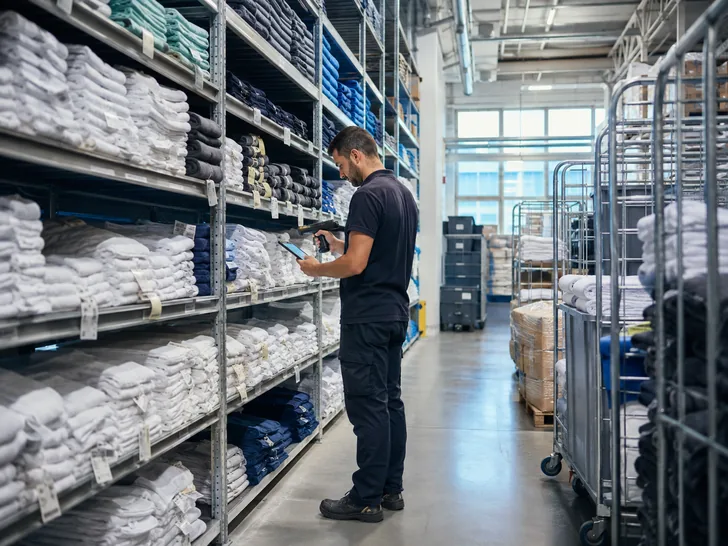
Insights
Linen loss: where textiles disappear and how to measure it
The quick answer
Linen loss is the share of textiles that leave the cycle without being retired on purpose: pieces that are delivered and never come back, that go missing inside the laundry, or that are thrown away without anyone recording it. You measure it by comparing what was sent out with what came back, per customer and per item type, over a fixed period. Without item-level counts that comparison rests on estimates and an annual stocktake. With RFID at intake and dispatch it comes from reads.
The figure itself is only the start. What reduces losses is knowing where they happen: at which step, with which customer, for which item type. With RFID, laundries can reach up to 70% less fabric loss, measured as the share of garments lost across the whole cycle.
Where textiles disappear
Losses rarely have one cause. They build up at the points where textiles change hands and nobody counts.
| Where | What happens | What shows it |
|---|---|---|
| At the customer site | Pieces are kept, moved to another department or site, used as rags or thrown away | Dispatch reads without a matching return |
| On the route | Carts are delivered to the wrong customer or swapped | Returns booked to a different customer than the delivery |
| At intake | Loads are not counted, or counted only by weight | Differences against the delivery note at the dock |
| Inside the laundry | Pieces end up in the wrong flow, pile up or are discarded without a record | Intake reads without a later read at drying or folding |
| At retirement | Worn pieces are taken out without being booked out | Items that stop appearing everywhere at once |
The customer site is usually the largest source, but it is also the one the laundry sees least. That is why returns are read where they are handed back: a fixed drop box at the customer or a movable cabinet on the delivery truck.
How to measure linen loss
The basic measure is the loss rate per customer and item type: pieces delivered minus pieces returned, minus pieces still in circulation at the customer, over a period, as a share of the pieces delivered. Define the period, the item types and what counts as returned before you start, and keep the definition the same from month to month.
| Input | Without RFID | With RFID |
|---|---|---|
| Pieces delivered | Delivery notes, often by weight or estimate | Dispatch reads per item |
| Pieces returned | Counts at intake, often by weight | Reads at the drop box, cabinet or intake |
| Pieces at the customer | Stocktake or estimate | Balance from dispatch and return reads |
| Pieces retired on purpose | Often not recorded | Booked out at the quality check |
Without RFID, weight-based counts hide the differences between item types and customers, and an annual stocktake only shows the total at the end of the year. With reads at intake, drying, folding and dispatch, every item has a last-seen place, so you see not only how much is lost, but where.
Measure a baseline before you change anything. Without it, nobody can say later what a new routine or a new system has changed. Our guide on laundry KPIs has definitions for loss rate and the figures around it.
What reduces linen loss
The measures that work follow from where the losses happen.
At the customer site
Balances per customer turn loss discussions into documented figures. When a customer sees what was delivered and what came back, item type by item type, the conversation is about facts, and it builds the trust both sides need.
On the route and at the dock
A tunnel or portal at intake and dispatch counts every cart without unpacking it, and books it to the right customer. A tunnel is cheaper and faster, a portal costs more but encloses the load and reads more accurately. Either way, swapped or misdelivered carts show up at the dock, not at invoicing.
Inside the laundry
With the three key stations, intake, drying and folding, every item is seen several times per cycle. A piece read at intake but not at folding is flagged, and the check shows whether it is missing, its tag is defective, or it was missed because tags lay too close together. Re-tagging happens at the quality check station right after folding.
Sometimes without technology
Some losses come from the routine itself: an unclear handover, a step where nobody counts. Then a changed routine is the cheaper fix, and we say so. Our article When RFID Isn't the Right Answer describes those cases.
Where to start
- Pick two or three customers and the item types where you suspect the largest losses.
- Measure a baseline over a fixed period, with a written definition of the loss rate.
- Find the step where nobody counts today, and count there first.
- Put read points where loads change hands: intake, dispatch and the customer site.
- Review the figures per customer and item type every month, and act on the largest gap.
Our page on RFID linen tracking shows how balances per customer work for flat linen and towels. To look at your own losses with us, use our enquiry form.
FAQ
 FAQ
Questions about
linen loss
What is linen loss?
Linen loss is the share of textiles that leave the cycle without being retired on purpose: pieces delivered and never returned, pieces that go missing in the laundry, and pieces discarded without a record.
How do I calculate the linen loss rate?
Per customer and item type, over a fixed period: pieces delivered minus pieces returned, minus pieces still in circulation at the customer, divided by pieces delivered. Keep the definition the same every month so the figures can be compared.
Where does most linen go missing?
Usually at the customer site, where pieces are kept, moved or thrown away, followed by the route and the points inside the laundry where nobody counts. Item-level reads show which applies in your case.
Can RFID stop linen from going missing?
RFID does not stop a piece from leaving a customer site. It shows where pieces leave the cycle, per step, customer and item type, so you can act there. With RFID, laundries can reach up to 70% less fabric loss, measured as the share of garments lost across the whole cycle.
Do we need a full stocktake to measure losses?
Not with item-level reads. Balances per customer build up from dispatch and return reads, so a stocktake becomes a check rather than a count from scratch.
Where are returns counted?
At the customer site, where textiles are handed back: a fixed drop box at the customer or a movable cabinet on the delivery truck. Anything counted once it is back at the laundry is intake.
Explore
More on RFID for laundries
Take the full system, or only the part you are missing. These pages go into each part and each industry.
- RFID laundry trackingHow tags, readers and software follow every textile through the laundry cycle, step by step.

- RFID laundry management systemDashboard, stock per customer, roles and integration: the software side of RFID in the laundry.
- RFID laundry tagsSaphire One: designed for 200 industrial wash cycles, sterilisation at 134 °C, sew-in or heat-seal.
- RFID linen trackingSheets, towels and table linen counted in bulk, with balances per customer for linen rental.
- Textile tracking softwareUse our software with tags and readers you already have, or as part of the full system.
- IndustriesWorkwear and uniform rental, healthcare, hospitality and linen rental: RFID by industry.
Blog
Related Blog
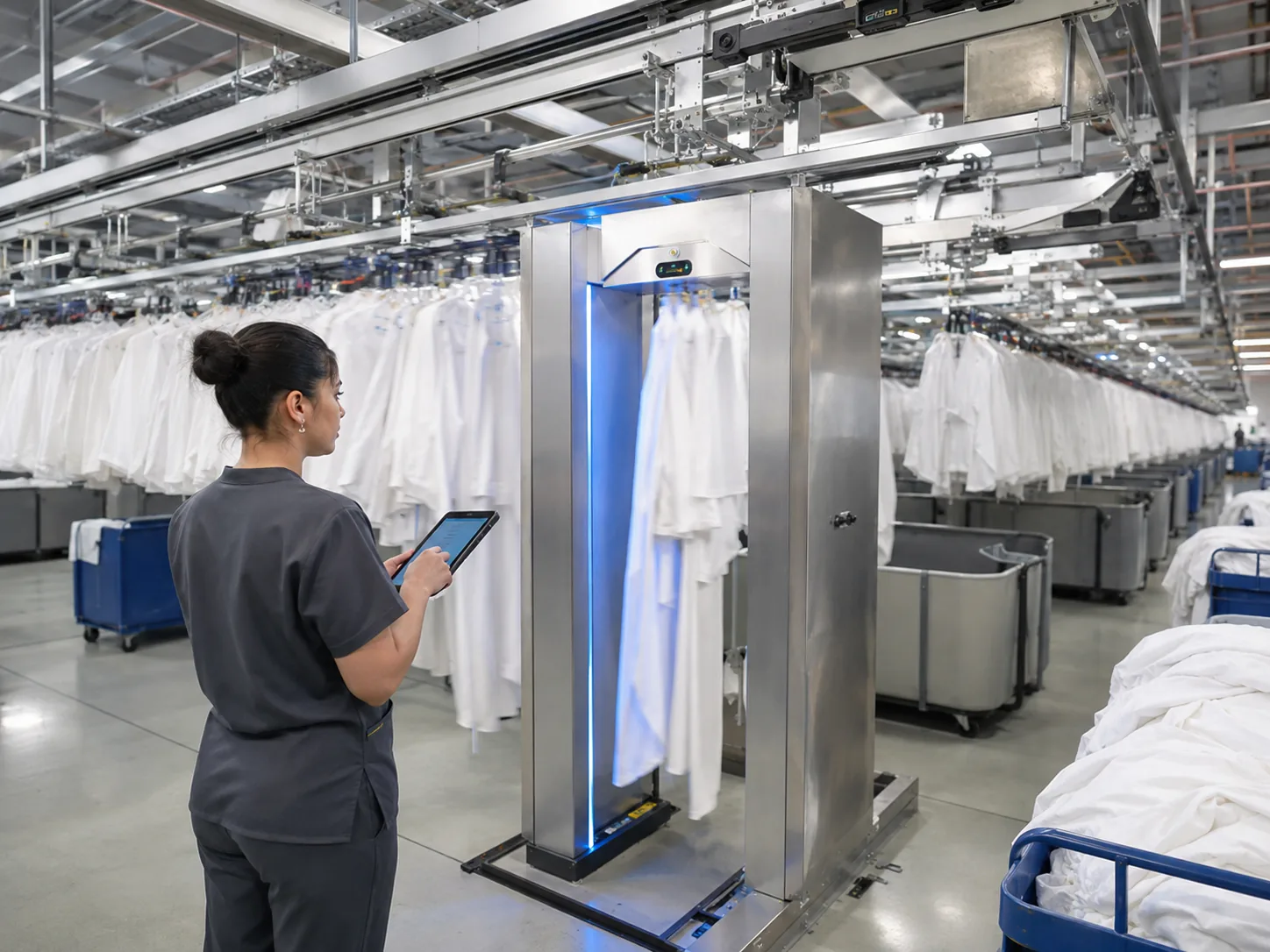
Technology
RFID vs. barcode vs. camera in commercial laundries
RFID, barcode and camera systems answer different questions in a laundry. A decision matrix, the honest cases where a barcode is enough, and how to combine the options along the laundry cycle.
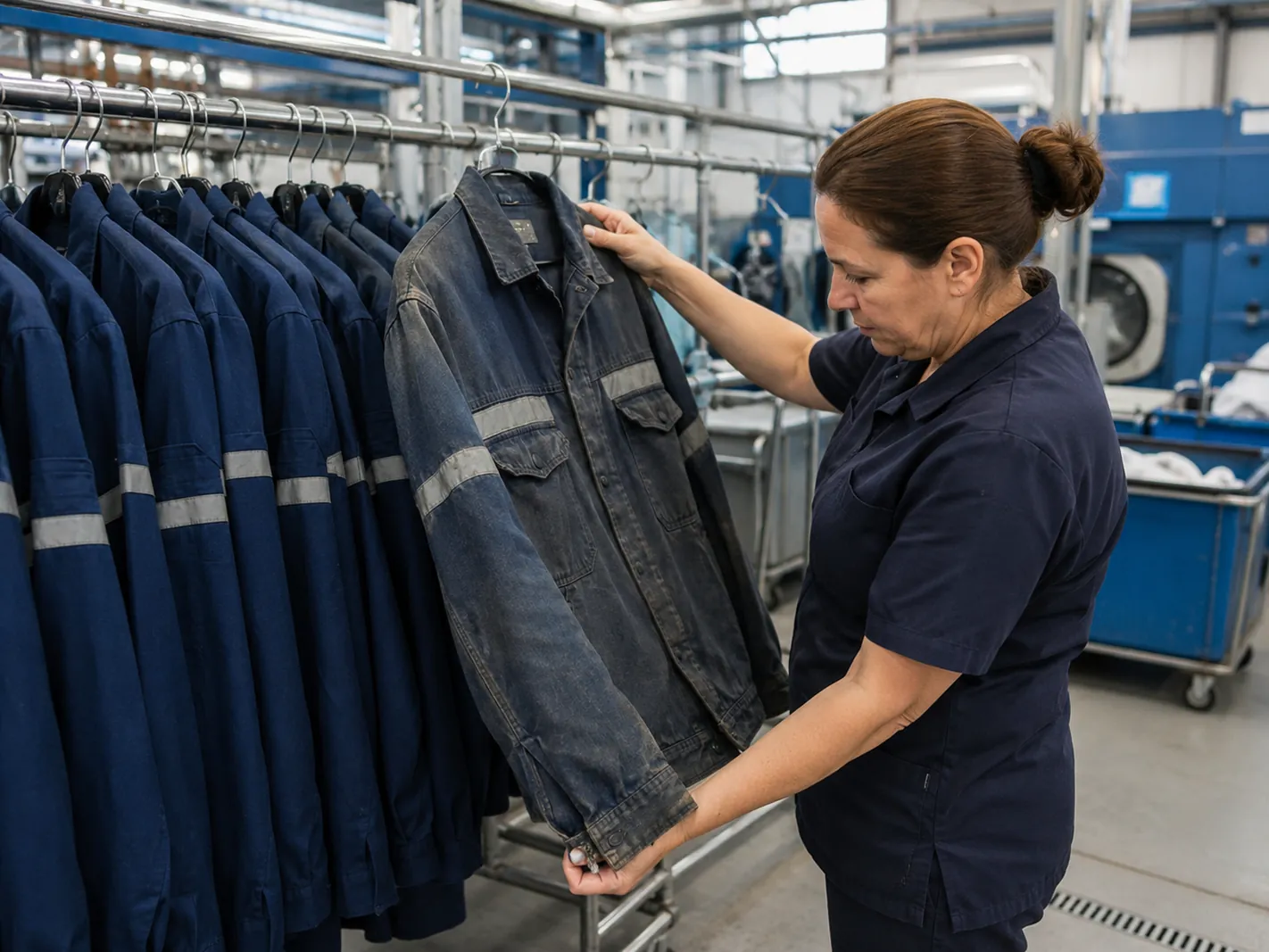
Insights
How RFID works in uniform rental programs
How RFID links each garment to a wearer and a customer site in uniform and workwear rental, which read points a program needs, what changes for the laundry and its customers, and how to roll it out.