

Textile tracking
software
See where every textile was last read, who holds it and when to replace it. Use it with our tags and readers, or with the ones you already have.
Request a demo
What textile tracking software does
What it is
 What it is
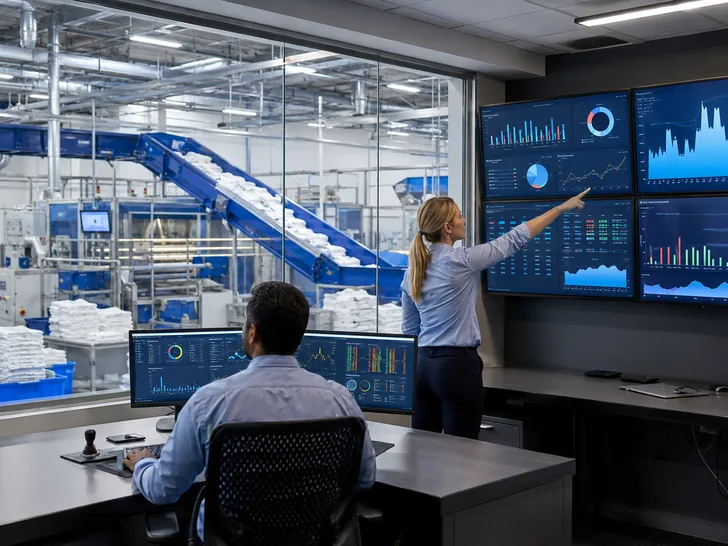
Textile tracking software turns RFID reads into records a laundry can work with. Every read adds to the history of one item: which customer holds it, where it was last seen and how often it has been washed. On top of that, the Leanwave dashboard gives each team the figures it acts on, from stock per customer to items lost and average turnaround time. Stock figures, balances and losses come from item-level reads, not from manual counts. You can run it with our tags and readers, or on its own if you already have the hardware.


The Leanwave dashboard
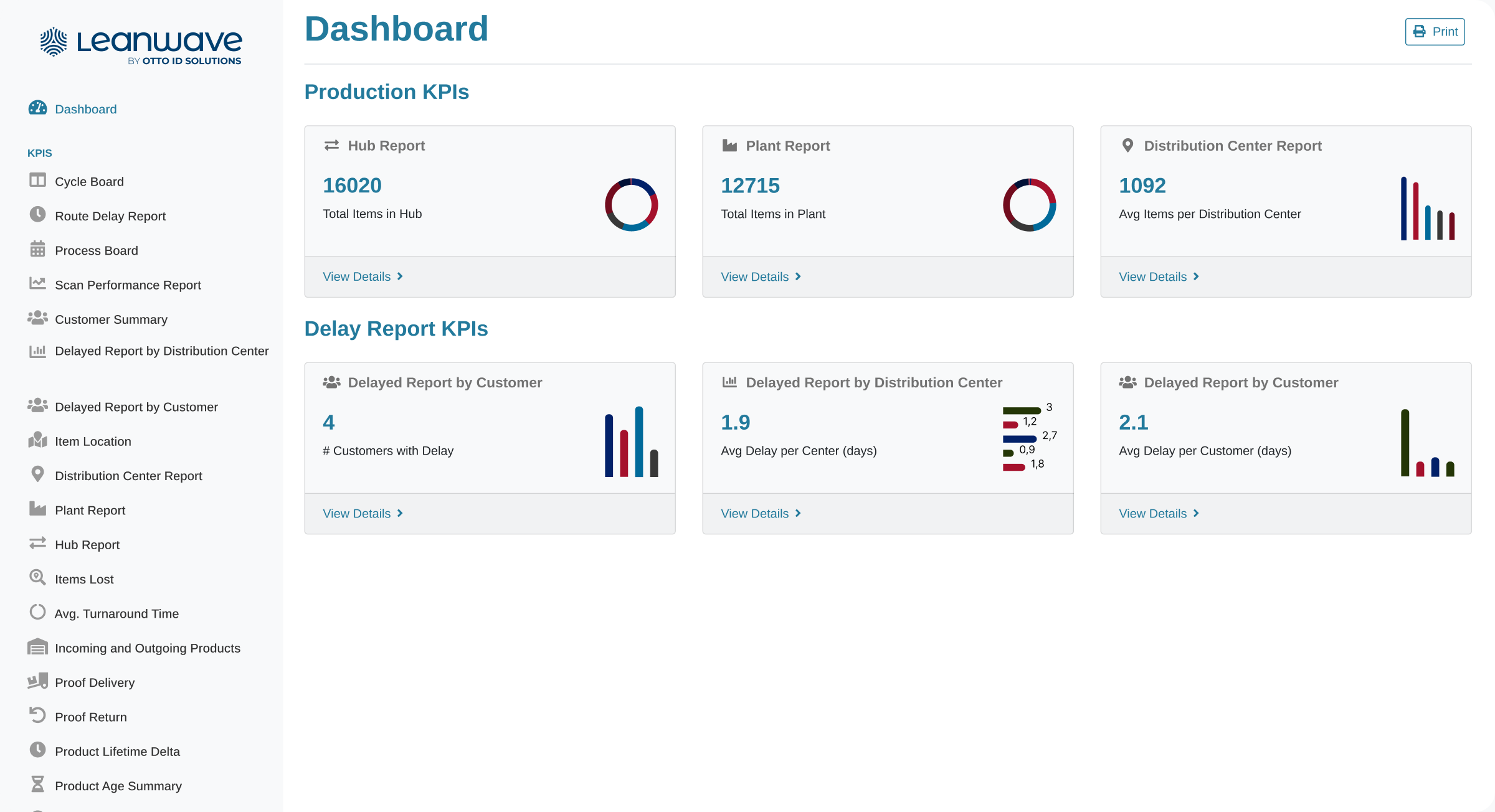

Item history. Every textile with its customer, last location, wash count and every movement on record.

Production KPIs. Items in the hub and in the plant, and average items per distribution centre, on one screen.

Delay reports. Delays per customer and per distribution centre, so you see where textiles stall.

Proof of delivery and return. What went out and what came back, per customer, as a record rather than an estimate.

Items lost. Which items left the cycle, and at which step or with which customer.

Product lifetime. How long textiles really last, so replacements follow actual use.
Views by role
One system, the figures each team needs
Nobody in a laundry needs raw scan lists. Each team sees what it acts on, with the same definitions everywhere.
Operations
Stock by location and by customer, turnaround times and the steps where textiles stall. The process board shows where work queues up.
Production
Production sees tasks: what is in the plant, what has come in and gone out, and what is due next, based on counts rather than estimates.
Logistics
Incoming and outgoing products and route delays per customer and distribution centre, with proof of delivery and return.
Purchasing
Wash counts and age per item show what is close to the end of its life, so replacements are ordered on evidence.
Finance and controlling
Losses and circulation per customer and per site, as a dependable basis for customer accounts and for discussing loss charges.
Sales and customer success
A customer summary with balances and delivery records, so a conversation with a customer starts from the same figures on both sides.


Textile inventory tracking
Textile inventory tracking without a count by hand
A linen inventory management system is only as good as its counts. With RFID, the stock figure comes from reads, so it can be checked item by item and does not depend on the last manual stocktake.
Stock by location
What is in the plant, in the hub and at each distribution centre, based on where each item was last read.
Stock by customer
What each customer has received, returned and still holds, per item type.
Stock that has not come back
What has left dispatch and has not come back yet, per customer, so a gap shows up long before a year-end write-off.


How it works
How a read
becomes
a decision


1/3
Capture
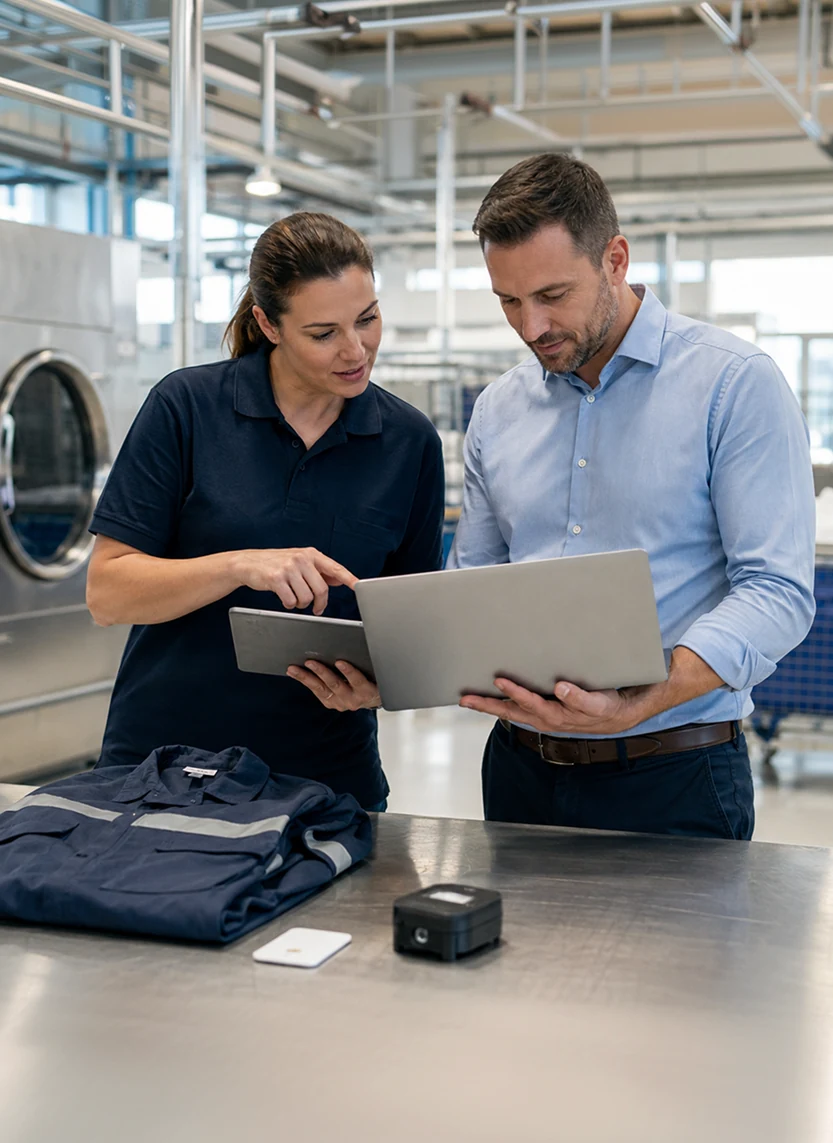
A read point registers every tag that passes, in bulk and without unpacking. Each read carries three facts: which item, where and when. On its own, that is only a list of numbers.
Record
The software links each read to the master data of the item: customer, textile type, size, wash count and history. A pass through the dispatch tunnel becomes a delivery for a named customer. A pass at intake becomes a return.
Act
Records feed the dashboard. Purchasing sees what is reaching the end of its life, controlling sees losses per customer, and production sees where work queues up.
What it works with
Works with what you already run
You do not have to replace what works. The software can be the whole reason you come to us, or one part of a larger system.
With our tags and readers
Saphire One tags and reader infrastructure planned around your process, with the software as the last link in the chain.
With tags and hardware you have
If you already have tags or readers, you can use the software on its own. Which equipment fits depends on your set-up, so we check it with you at the start.
Across your sites
One dashboard can show plants, hubs and distribution centres with the same definitions, while each laundry keeps its own configuration.


Getting started
How the software goes live
We set the software up around your process. Each step ends with a decision you can check.
1/5
1. Process and data. We look at your textile types, customers and read points, and at which figures your teams need to act on.
2. Set-up. Item types, customers and sites are set up with the same definitions everywhere. Existing tags and hardware are checked at this stage.
3. Pilot. The dashboard is set up for your whole RFID set-up from the start. Only the tags start small, with one customer or one product line at one site. We check whether the figures match reality and help the people who use them.
4. Rollout and training. Tagging extends to further customers, product lines and sites, and each team learns the views and routines it needs.
5. Review. After go-live we go through the figures with you and adjust reports and read points where the data shows a gap.
When RFID is not the answer
When RFID is
not the answer
If RFID is the answer, we build with RFID. If it isn't, we find what is. RFID is our core expertise, but it is one tool among several, and the right one depends on the step in your process.
RFID
| Fits when | Volumes are high, items circulate many times and you need counts and histories per item and per customer. |
|---|---|
| Limits | Every item needs a tag and every read point needs hardware, so volume and losses have to justify the investment. Metal-heavy areas need a carefully planned reading zone. |
| Typical use | Intake and dispatch counts, rental balances, wash counts. |
Barcode
| Fits when | Volumes are lower, items are handled one by one anyway and the budget per item is tight. |
|---|---|
| Limits | Needs line of sight and reads one item at a time. Printed codes have to stay readable through industrial washing. |
| Typical use | Manual check stations, small textile pools, looking up a single item. |
Camera and AI
| Fits when | What matters is visible, such as whether an item is clean, stained or damaged, or what type it is. |
|---|---|
| Limits | Recognises a type or a condition, not the identity of one particular item across many cycles. Needs fixed positions and controlled lighting. |
| Typical use | Telling you whether a garment is broken, stained or has lost colour, which also helps with sorting. |
Process change
| Fits when | Losses or delays come from the workflow itself, such as unclear handovers, a step where nobody counts, or a bottleneck. |
|---|---|
| Limits | Depends on routines being followed and produces no item history. |
| Typical use | A fixed handover routine, a reorganised dispatch area, a counting step where none exists. |
Often the answer is a combination: RFID at intake and dispatch, a camera at the quality check, a changed routine at the handover.
Request a system checkFAQ
Questions about
textile tracking software
What is textile tracking software?
Textile tracking software records where each textile has been, who holds it and how often it has been washed, and turns those records into figures a laundry can act on. With RFID the data comes from automatic reads rather than manual entries, so a stock figure or a customer balance can be checked item by item.
What does linen management software do?
Linen management software keeps track of linen stock, circulation and losses, usually per customer and item type. The Leanwave dashboard does this from item-level RFID reads: balances per customer, wash counts per piece, items lost and turnaround times. That makes it suited to laundries and textile service companies that handle large volumes and have to account for them.
What is textile inventory tracking?
Textile inventory tracking means knowing how many textiles you have, where they are and in what condition. Manual stocktakes give you a snapshot that is out of date the next day. With RFID the stock figure comes from reads at intake, dispatch and other read points in the process, so it stays current without a manual count.
What is a linen inventory management system?
A linen inventory management system is software that holds your linen stock per location, customer and item type, and shows what is missing or due for replacement. It is one function of a wider laundry tracking system. Its figures are only as reliable as the counts behind it, which is why we base them on item-level reads.
Is this the same as laundry management software for laundromats?
No. Software for laundromats and dry cleaners handles orders, payments and customer tickets. Textile tracking software is built for industrial laundries and textile services: it follows large volumes of individual items through the process and across customers, and it works from RFID reads. If you run a small shop with a till, it is not what you need.
Does the software show where an item is right now?
It shows where the item was last read. Passive tags have no battery and no GPS, so an item is only recorded when it passes a read point. How close that comes to the current position depends on your read points. The dashboard also shows what has left dispatch and has not come back yet, which is usually the more useful signal.
Can we use the software with tags and readers we already have?
Yes, you can use the software on its own if you already have tags or hardware. There are many tag and reader types, and each suits certain conditions, so we check your existing equipment at the start instead of working from a fixed list. The reads have to be reliable for the figures to be.
Does it integrate with our ERP and billing software?
On request, yes: data from the dashboard can also be passed to your ERP or billing system. This is an add-on rather than part of a standard rollout, and what it covers is agreed per project.
Who in the laundry uses it?
Each team has its own view. Operations sees stock and the steps where textiles stall, production sees tasks, logistics sees incoming and outgoing products and route delays, purchasing sees wear and replacement, and controlling sees losses per customer. Sales and customer success can start a customer conversation from the same figures.
Can it cover several sites?
Yes. The dashboard can show plants, hubs and distribution centres with the same item and customer definitions, so figures can be compared across sites. Each laundry keeps its own hardware configuration and processes, and textiles that move between sites keep their history.
What is the difference between textile tracking software and an RFID laundry management system?
The software is one part of the system. An RFID laundry management system also includes the tags in the textiles, the readers and the planning of where they sit. If you have those already, the software can stand alone. If you are starting from scratch, we plan all parts together so the figures can be trusted.
Explore
More on RFID for laundries
Take the full system, or only the part you are missing. These pages go into each part and each industry.
- RFID laundry trackingHow tags, readers and software follow every textile through the laundry cycle, step by step.

- RFID laundry management systemDashboard, stock per customer, roles and integration: the software side of RFID in the laundry.
- RFID laundry tagsSaphire One: designed for 200 industrial wash cycles, sterilisation at 134 °C, sew-in or heat-seal.
- RFID linen trackingSheets, towels and table linen counted in bulk, with balances per customer for linen rental.
See the dashboard with your own questions
Tell us how many textiles, customers and sites you handle and what you cannot see today. We show you what the dashboard answers, and say plainly where it would not help.