



Operations
When RFID Isn't the Right Answer
The instinct to buy technology first
When a laundry runs into a problem, missing textiles, rising turnaround times, unreliable counts, the first instinct is often to buy a solution. More tags, more readers, more software. The assumption is that adding technology automatically adds control.
Sometimes it does. But technology applied to the wrong part of the process rarely fixes the underlying issue. It just adds cost and complexity on top of it.
Start with the process, not the product
Before recommending anything, we ask a simpler question: where is the problem actually happening?
A tag that isn't reading properly might not be a tag problem at all. It could be a heat-seal that wasn't pressed correctly and is starting to fail. It could be a reader whose antenna range doesn't match the frequency the tags need. It could be a dashboard that shows the wrong information, or no information at all. And sometimes the data is fine, but the process around it isn't.
Understanding the real cause first is what makes the difference between a solution that works and one that only looks busy.
Where RFID reaches its limits
RFID is our core expertise, and for most textile-service environments, it is the right foundation. But it isn't universal, and pretending otherwise helps no one.
There are situations where RFID struggles. Heavily soiled textiles, for example, can carry substances that interfere with a clean read, so a tag that performs perfectly on clean linen may not read reliably at a dirty-side station. Certain materials and metal-heavy environments create their own challenges. In cases like these, forcing RFID into the process leads to frustration, not transparency.
This is where other technologies come in. Camera-based systems combined with AI can, for instance, detect whether an item is clean or classify products visually, exactly where RFID would fall short. The point isn't to replace RFID. It's to use the right tool for the specific step in the process.
Sometimes the fix isn't technology at all
The most honest recommendation we make is occasionally the simplest one: you may not need new hardware.
If a process has a clear bottleneck or a structural inefficiency, the highest-value change might be adjusting the workflow itself, not adding a tracking layer on top of it. In those cases, the smartest investment is consulting, not equipment. It costs less, it's faster to implement, and it solves the actual problem.
Why an honest "no" builds a stronger operation
Telling a customer what they don't need might sound like bad business. We see it the opposite way.
A solution that's oversized for the problem creates ongoing cost, maintenance and complexity that never pays for itself. A solution built precisely around the real pain point does the opposite: it's leaner, easier to run, and dependable. Our goal is an operation that runs smoothly and predictably, and that only happens when the technology matches the need instead of exceeding it.
“Good consulting starts with the confidence to tell a customer what they don't need. The best solution isn't the one that sells the most hardware. It's the one that actually fits. ”
Conclusion
RFID is a powerful technology, and for most laundry and textile-service operations it's the right one. But the real value doesn't come from the tag. It comes from understanding the process well enough to know exactly where technology helps, where a different tool fits better, and where the answer is simpler than expected.
That's the question worth starting with: not "Which product should we buy?" but "What does our process actually need?"
Blog
 Blog
BlogRelated Blog
Technology
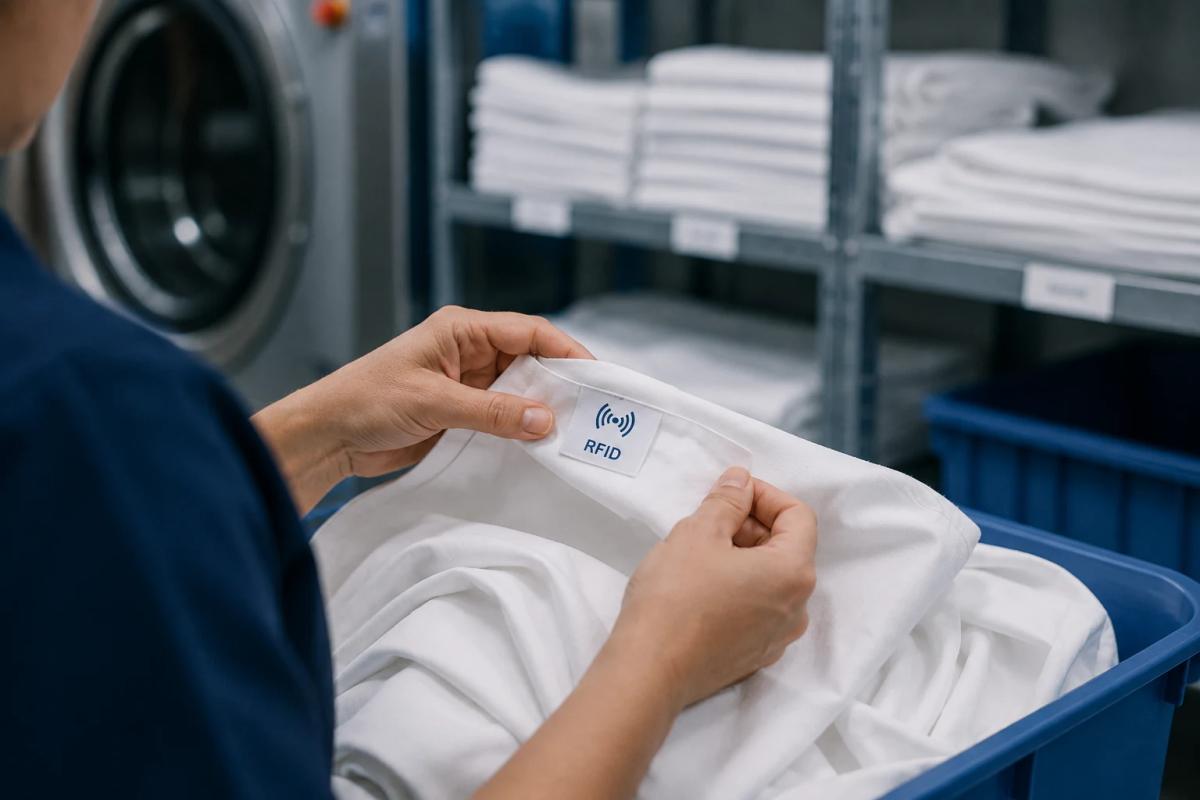
RFID Tags by Leanwave
RFID stands for Radio Frequency Identification. In simple terms, RFID allows an object to be identified wirelessly using radio waves.
Technology
Introducing Leanwave
Leanwave delivers tailored RFID tags, hardware, and integrated software designed to optimise complex operations in commercial textiles, healthcare, and hospitality.